Bord & Pillar · Areas · Weston & the pit villages
Garage door repairs & service in Weston
The old grid's doors.
Weston, Abermain, Pelaw Main, Stanford Merthyr, Sawyers Gully. Villages named for pits and seams, full of houses that have outlived the industry that built them, with the original doors still hanging to prove it.
Five villages, one kind of patch
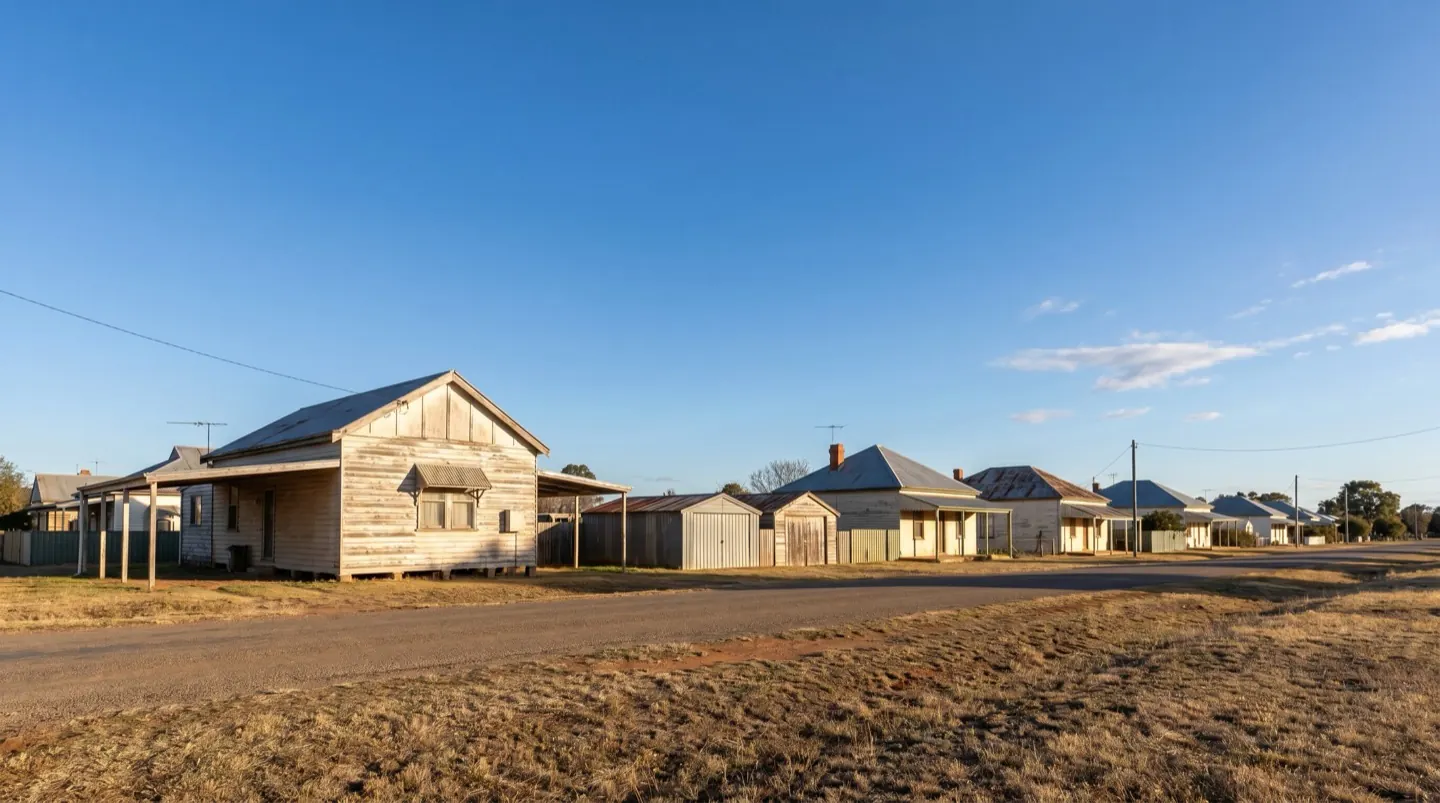
Weston is the biggest of them, a house town through and through: nearly two thousand addresses and almost every one a separate house with a yard, a shed, or both. Abermain sits on the Cessnock road with thirteen hundred more. Pelaw Main and Stanford Merthyr, the two collieries Kurri was planned around, are a few streets each. Sawyers Gully trails off semi-rural, where the blocks get wide and the sheds get serious.
What the villages share is age. These streets were built through the first half of last century, and a lot of their garages still swing the door they were built with: one-piece tilts on pivot frames, corrugated rollers wound onto their drums, timber frames that have moved with the seasons for longer than most trades have been alive.
What age does to a door
- Gone heavy
- Springs lose tension over the decades and the family learns to heave. It creeps, so nobody calls it a fault.
- Usually a re-tension, not a replacement.
- Out of true
- Old timber frames move. The door starts catching a corner, then dropping a side.
- The frame gets read first, always.
- Dry tracks
- Decades of dust in dry country. The grind isn't damage yet, but it's headed there.
- A service fix while it's still one.
- Spring age-out
- Springs are cycle-rated and the originals have spent theirs several times over.
- Replaced like for like. Ours, not yours.
The assessment, on an older door
Keep is the default. The frame decides.
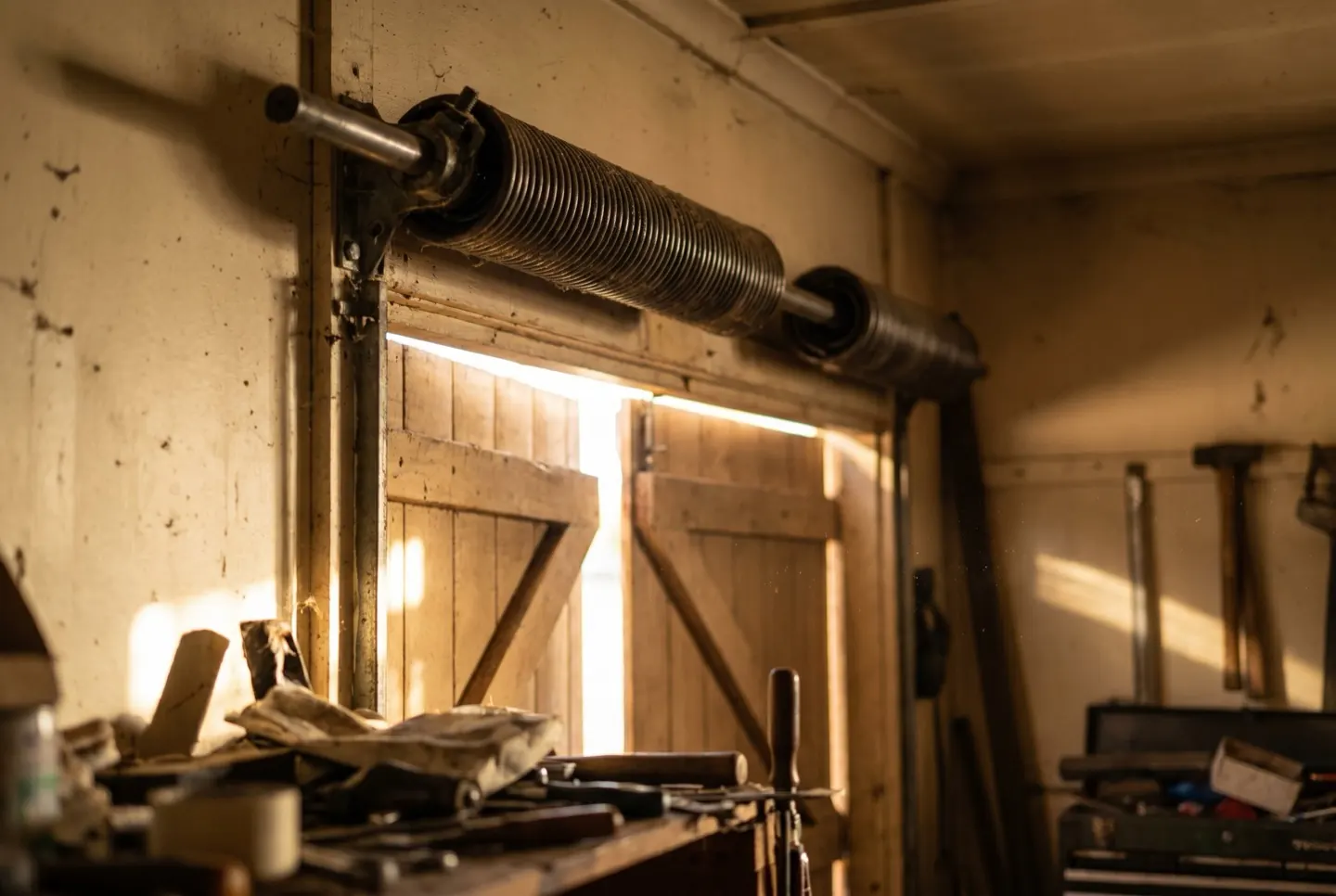
An older door earns a different reading order. The frame first, because everything hangs off it: if the timber is sound, almost anything else can be repaired at sensible money. Then the counterbalance, the tracks, the rollers, the fixings, each one written down as sound or spent.
This is a town that keeps things. Half the garages on our round shelter a restoration, a slow build, or a ute that has to start at five. So the verdict comes itemised, keep beside replace, and we'll say "this door has years in it" as readily as we'll say "this frame is done". You decide with the sheet in your hand.
Out the back
The shed door counts too
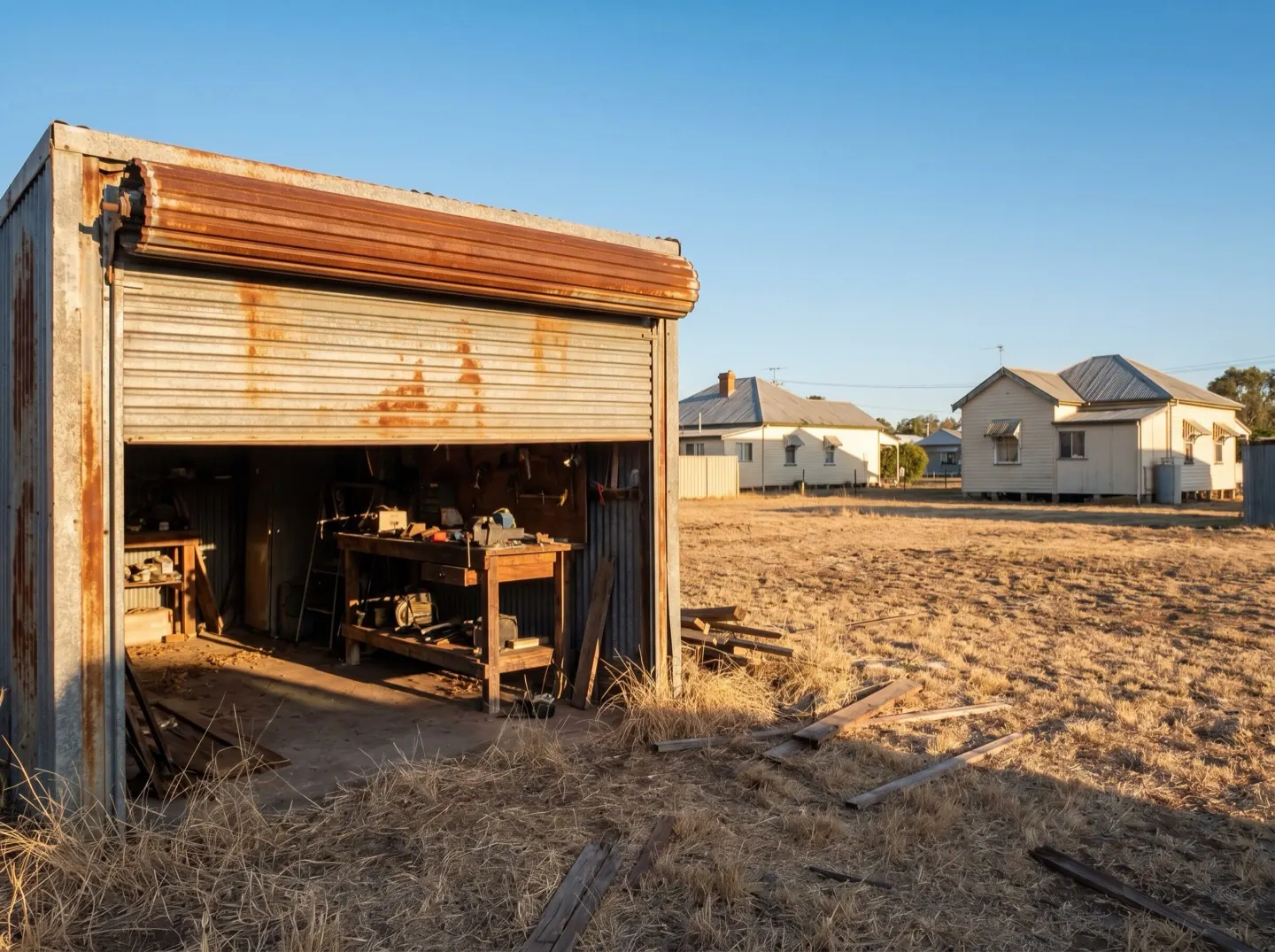
Toward Sawyers Gully and along the deep blocks of Weston and Abermain, the second door matters as much as the first: the shed with the float, the boat, the engine crane. Wide-span roller doors on farm sheds wear the same way house doors do, just with more weight and more wind.
Shed doors get the same reading: curtain fatigue, drum wear, guide condition, and whether the door still suits what the shed now holds. A shed that has graduated from mower to machinery sometimes wants a taller, wider, or motorised door, and that's a measure-and-quote conversation, not a guess.